

After several months of nonstop lobbying and emotional manipulation Audrey finally broke me down.
She wanted a lemonade stand.
Not just casually wanted one. Audrey wanted a lemonade stand the way Walter White wanted an empire. She had seen Parker run lemonade stands on the Greenway last year and make actual money, and now she wanted in on the game.
Parker, to his credit, had already proven the business model. He set up on the Richland Creek Greenway and discovered that hot, sweaty Nashvillians will pay almost any amount of money to a child if that child has ice water, confidence, and no visible understanding of how to count change.
Audrey saw Parker’s success and immediately understood: there is money to be made off people exercising outdoors against their better judgment.
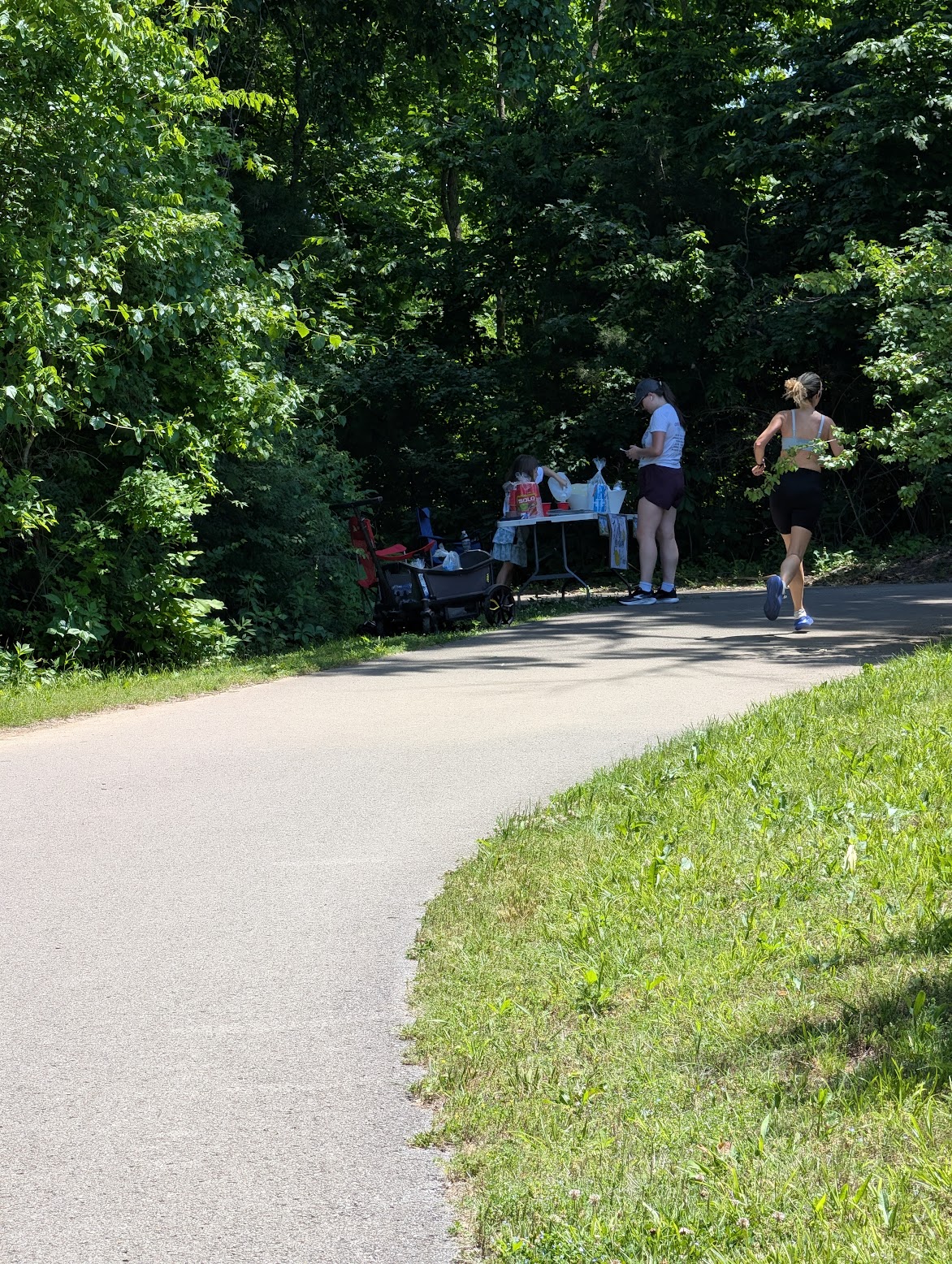
Fortunately, we live right on the Richland Creek Greenway, which is basically the I-65 of West Nashville recreational cardio. On any given weekend, it is packed with Vanderbilt sorority walkers, golden doodles named things like Murphy and Biscuit, dads in Hokas trying to outrun cholesterol, and compulsive runners doing laps around the 3.27-mile loop like they’re training for the next Hunger Games.
It is, in short, the perfect place for a talkative 6-year-old girl dressed like a K-pop demon hunter to sell suspiciously affordable lemonade.
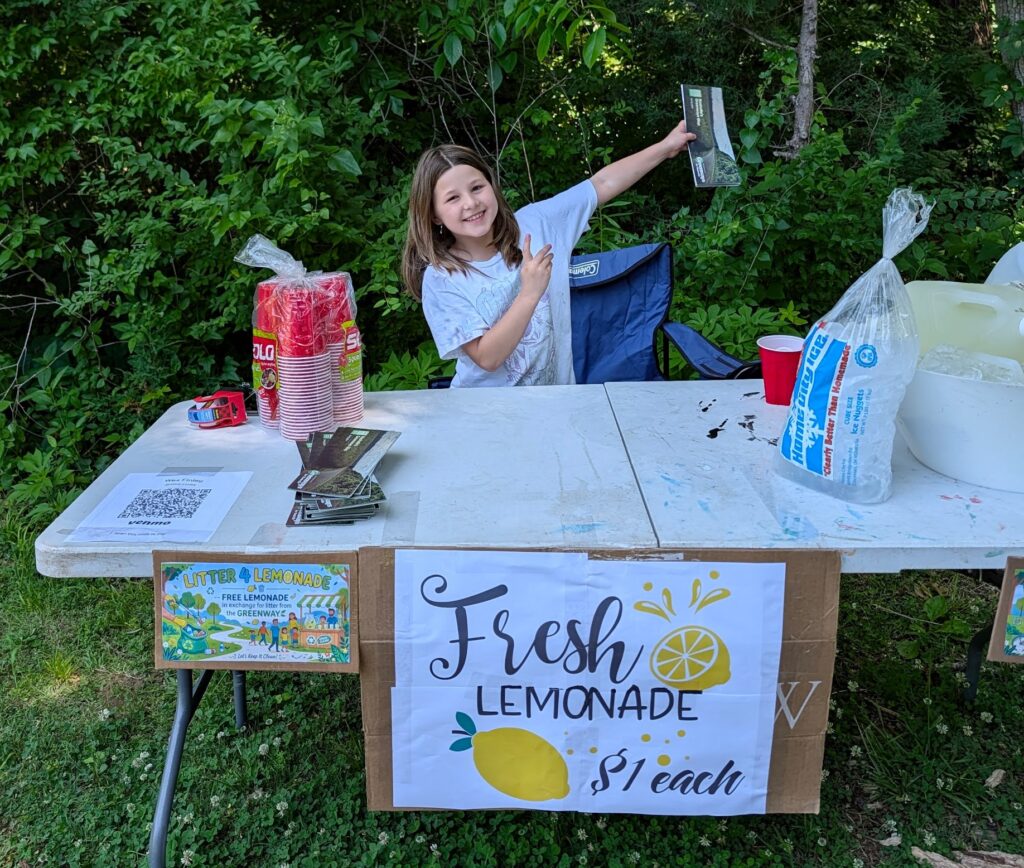
I decided that if we were going to do this, we were going to do it properly. Which, in my case, meant printing a sign on regular printer paper and taping it to a table like a Depression-era produce vendor.
The sign said:
“Fresh” Lemonade — $1
Audrey did not understand why the word “fresh” was in quotation marks, but I told her it was called branding.
Then I took her to Kroger to buy supplies. I briefly considered making actual lemonade from lemons, sugar, water, and whatever wholesome nonsense people pretend they do on Instagram. Then I remembered I am not Ina Garten, this was not a farmers market, and our target customer was a dehydrated man in compression socks who just wanted to not die before reaching McCabe.
So we bought three gallon jugs of Milo’s lemonade, a 40-pack of bottled water, 50 Solo cups, and three bags of ice.
Total cost: $50.
Standing there in the Kroger checkout line, I had my first moment of business panic.
“Will we even make this back?” I thought.
We got home and dragged out a paint-stained six-foot folding table that I am almost positive began its life as a beer pong stadium. It had the kind of stains that tell stories. Paint. Marker. Possibly queso. Definitely trauma.
We set up in the shade beside the north fork of the trail, and Audrey immediately went to work like Alec Baldwin in Glengarry Glen Ross.
“Would you like a Greenway map?” she asked every powerwalker.
Before they could answer, she followed up with, “We have a bowl of ice water for your dog. He looks hot.”
Within minutes, Audrey had a line.
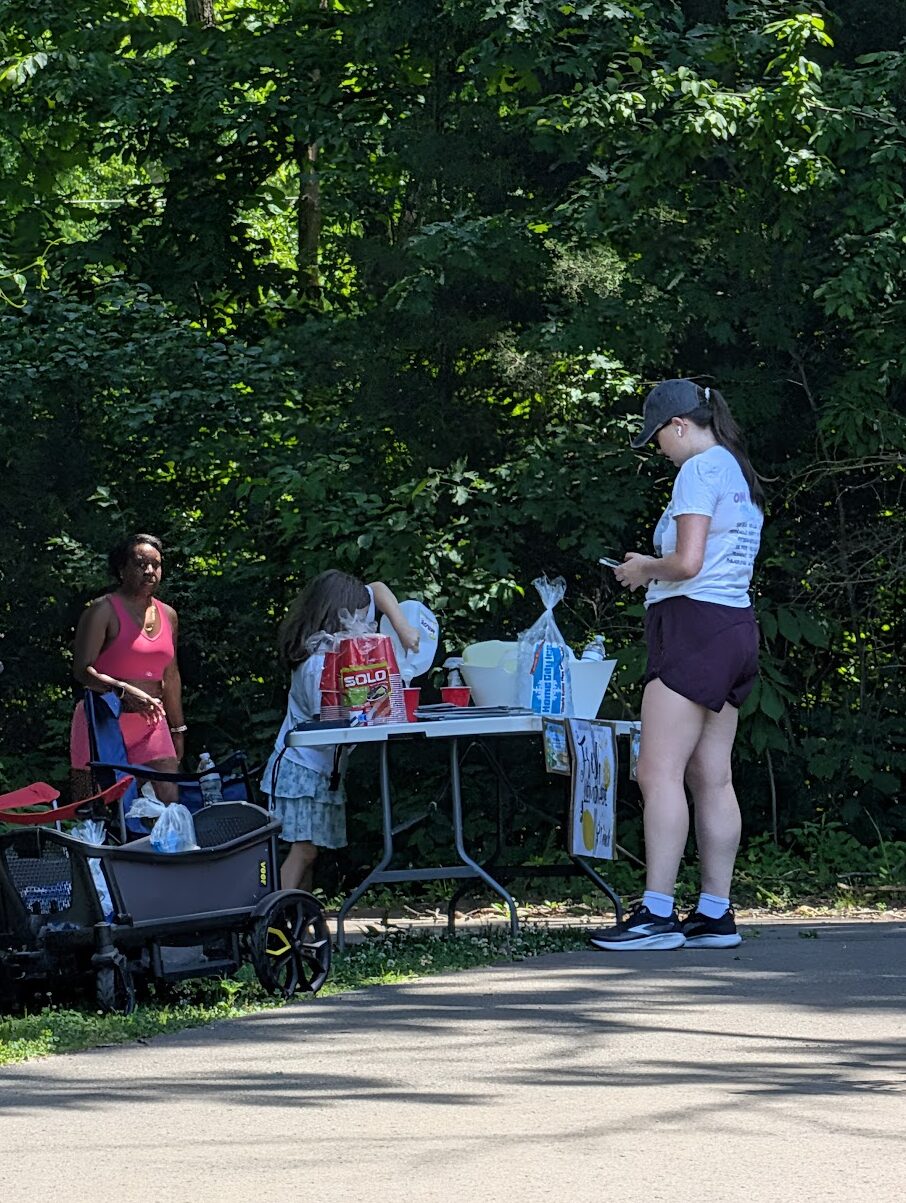
She poured cup after cup of what she repeatedly described as “homemade lemonade,” despite the fact that the Milo’s jug was sitting openly on the table like damning evidence in a Dateline episode. Nobody cared. It was cold, it was sweet, and it was being served by a tiny child in costume who had better customer service skills than most airlines.
People kept asking the same question. “What is this for?”
They expected a heartwarming answer. A school fundraiser. A charity. A Girl Scout troop. Maybe a mission trip. Audrey told the truth.
“I want to keep it in my safe so my brother doesn’t steal it.”
This was somehow more effective than charity. People loved it. They laughed, gave her money, and always tipped.
Business was booming. Then disaster struck.
“I have to pee,” Audrey announced.
In theory, this was a simple operational issue. Our house was only a short walk up the trail. She could run home, use the bathroom, and come back. In practice, this meant I would be left alone as a grown man operating a lemonade stand.
There are few things more socially uncomfortable than being an adult man sitting behind a child’s lemonade stand with no child present.
I immediately tried to distance myself from the operation. I sat several feet away from the table, stared aggressively at my phone, and attempted to project the body language of a man who was merely supervising, not personally retailing lemonade on Mother’s Day.
But the Greenway traffic did not care. People kept coming.
A couple walked up. ”Is this lemonade for sale?”
I looked around, hoping Audrey would materialize from the bushes like Batman.
“She’ll be right back,” I said.
They stared at me.
“It’s for my daughter,” I added, way too quickly.
This became my mantra.
“It’s for my daughter.”
“Dollar each. It’s for my daughter.”
“Yes, we take Venmo. Again, daughter.”
I said it so many times I started sounding like I was raising money for her experimental lemonade surgery.
The worst part was that the customers were very nice, which somehow made it worse. Nobody accused me of being a weird Greenway lemonade man. They just smiled politely and gave me money, which is exactly what you would do if you encountered a weird Greenway lemonade man.
Finally, Audrey returned, refreshed and jumped right back into sales mode.
We sold the rest of the lemonade. Then the waters. Then I started packing up, relieved that our small business experiment had ended before I needed to apply for a vendor permit or explain anything to a Metro Parks employee.
But Audrey wasn’t done. “We still have maps,” she said.
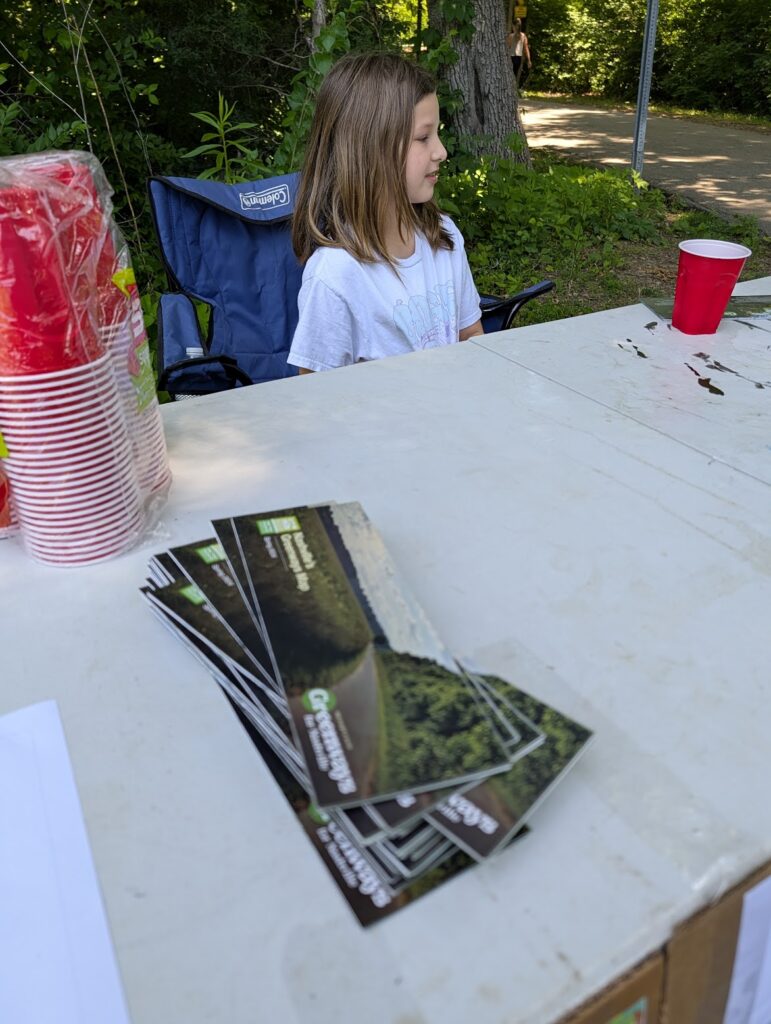
I looked at the stack of Nashville Greenway maps.
“That’s okay,” I said. “We can bring them home.”
She looked at me like I had just suggested burning down a library. “No. People need maps.”
So for the next 45 minutes, Audrey ran around barefoot on the Greenway handing maps to anyone who would remove an earbud long enough to acknowledge her existence.
“Do you need a map?”
“Do you know where the loop goes?”
“This shows all the greenways.”
Some people took one out of kindness. Some actually seemed interested. A few were clearly confused and accepted the map in the way people accept religious pamphlets at airports.
But Audrey was committed. She was no longer selling lemonade. She had pivoted to public service.
By the end of the day, she was sweaty, filthy, barefoot, and wildly proud of herself.
When we got home, I counted the money.
Between cash and Venmo, Audrey had made $172.27.
I still have no idea where the 27 cents came from. We were not charging tax. There was no coin jar. At no point did Audrey offer fractional lemonade.
Not bad for a six-year-old.
Actually, not bad for anyone.
I briefly considered asking her to contribute to the cost of goods sold, but she had already taken the money, put it in her safe, and made it clear that Parker was not to be trusted.
Which, honestly, is just good accounting.
The only thing I’m worried about now is Venmo sending me a 1099 because my daughter accidentally created a lemonade empire on the Greenway.
And if the IRS asks, I’m telling them the same thing I told every customer while Audrey was in the bathroom:
It was for my daughter.
Leave a Reply